
BMO's 2027 Outlook: Another Rate Hike Coming, and BC Buyers Are in the Crosshairs
Share
News article poster
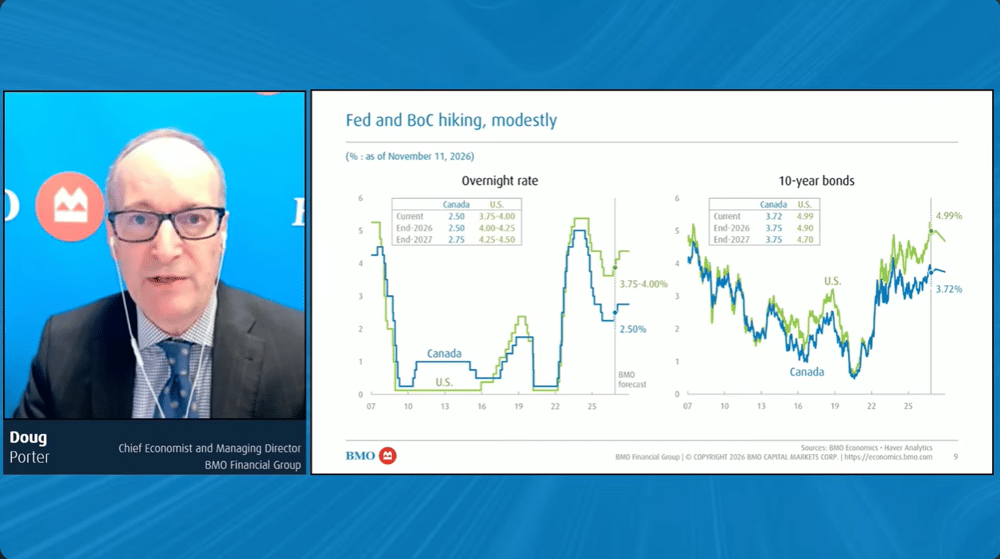
BMO Capital Markets issued a stark revision to its 2027 economic outlook on November 24, projecting Canadian GDP growth at 2%—above the 20-year average—while warning that mortgage markets are not out of the woods. In the report authored by Douglas Porter, Managing Director and Chief Economist, and Robert Kavcic, Senior Economist, the bank explicitly forecasts at least one additional Bank of Canada rate hike, with Porter stating that two hikes will likely be sufficient to contain inflationary pressure. The forecast follows an estimated 1% expansion in 2026, a year dragged down by US tariffs of 50% on steel and aluminum and 35% on lumber. The base case assumes no meaningful trade resolution with the United States, leaving energy prices and bond yields as persistent sources of upward pressure on borrowing costs heading into the new year.
For Greater Vancouver homeowners and prospective buyers, the regional breakdown in BMO’s analysis is particularly relevant. Kavcic singled out British Columbia and Ontario as the provinces most exposed to further tightening, citing elevated household debt levels and multi-year housing downturns that have already strained affordability and construction pipelines. Ontario is seeing prices retreat in several markets with construction activity pulled back sharply, while BC has endured a prolonged slump that has yet to find a durable floor. The report notes that any additional upward pressure on mortgage rates would deter buyers further and slow new home construction, delaying recovery timelines in both provinces. This comes as long-term bond yields have already backed up, threatening to push fixed mortgage rates higher even before any central bank action.
Question

Jessie Mo Commentary
From a senior Greater Vancouver agent's perspective, this BMO report changes the conversation from "when will rates drop" to "how do I survive the next hike." BC's position as the most rate-sensitive province means local buyers, sellers, and investors are playing on hard mode compared to Alberta or the Prairies. The practical point is that anyone transacting in the first half of 2027 needs to underwrite their deal assuming borrowing costs are flat or higher, not lower. Sellers pricing their homes should recognize that buyer qualification thresholds are tightening again, not loosening. The key is not to overreact to one headline, but to stop waiting for a rate-cut bailout that BMO no longer sees coming.